Dealing with a front tooth gap you've been covering up in every photo? Dentist Open Now connects you with a specialist in Austin, TX who treats this specific issue every week, not occasionally.
Call the number below and a scheduling coordinator finds you the next available specialist.
+1-866-227-2801 Call Now
Losing a tooth changes more than your smile — it changes how you chew, how your jawbone holds its shape, and eventually how your other teeth start to shift into the gap. A titanium implant post replaces the root itself, not just the visible crown, which is why it stops that shifting before it starts.
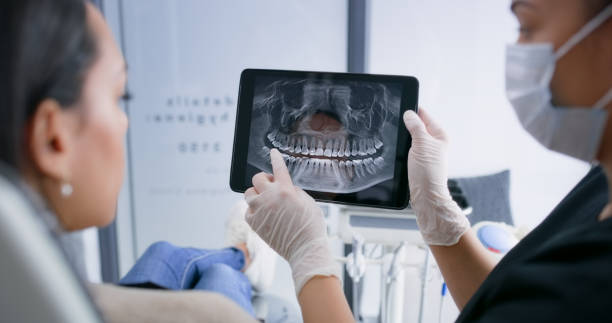
Our network's implant specialists use 3D cone-beam imaging to map bone density before ever touching a drill, so the placement plan accounts for exactly how much bone you have to work with. If bone grafting is needed first, that gets flagged at the planning stage so there are no surprises once you're in the chair.
Healing time before the crown goes on typically runs three to six months, since the implant needs to fuse solidly with the bone before it can bear normal chewing force. A temporary tooth usually covers the gap during that healing window so you're not left with a visible space.
Placement is handled by periodontists or oral surgeons with specific implant-surgery training, not a general dentist doing it occasionally.
Cone-beam CT imaging maps your jawbone in three dimensions before the surgical guide is fabricated.
You get a written stage-by-stage estimate — surgery, healing period, and crown — before agreeing to anything.
Offices in the network can perform grafting procedures in the same practice, avoiding a second referral chain.
Our network specialists cover the full range of this procedure, from the routine case to the complicated one.
One missing tooth gets one implant post and one crown, designed to blend in rather than stand out.
Multiple missing teeth in a row can be replaced with a bridge anchored to as few as two implant posts.
A full arch of missing teeth is restored using just four strategically angled implants per jaw.
If your current dentures move when you eat, implant anchors can stabilize them without a full-arch rebuild.
Rebuilds bone volume in the jaw or lifts the sinus floor to create room for implant placement.
Select cases qualify for a temporary crown placed the same day as surgery, with the final crown fitted after healing.
A coordinator answers and asks a few quick questions about your specific case and how soon you need care.
We match you with a nearby specialist experienced in this exact procedure and check real-time openings.
The specialist examines your case, often with same-visit X-rays, and gives you a cost estimate before starting anything.
You leave with the issue addressed and a plan for any next steps already scheduled.
"They walked me through the cost and the procedure before I agreed to anything. Appreciated that."
"Didn't have to wait weeks like my old dentist. Straight to a specialist who knew exactly what to do."
"No upsells, no pressure. Just the treatment I needed at the price I was told."
Healing and osseointegration typically take several months; the surgery itself is usually the shortest part of the timeline.
Placement is done under local anesthesia, and most patients describe recovery discomfort as similar to a tooth extraction.
Low bone density doesn't automatically rule out implants — grafting is a common first step for many patients.
Pricing depends on the number of implants and any bone work required, and it's broken down for you before treatment starts.
A bridge relies on adjacent teeth for support; an implant stands independently and doesn't require altering nearby teeth.
The titanium post itself rarely fails; the crown on top may need replacement after a decade or more of wear.
Our coverage spans Austin and its surrounding area, matching you with the closest available specialist.
Licensed to practice in TX, credential-checked before joining the network.
Call now and a real coordinator will match you with a specialist and a confirmed time.
Call +1-866-227-2801 Now